Humanities at St Joseph’s
At St Joseph’s, Humanities provides students with the knowledge, skills, and dispositions to explore their world, understand the past, and engage meaningfully in society. Teachers design purposeful lessons and use Ochre Education Humanities resources to explicitly teach content, then guide students to apply their knowledge through real-world inquiry, problem-solving, and exploration of local, national, and global contexts. The program is knowledge-rich and cumulative, building both teacher and student understanding over time while developing the skills necessary to use that knowledge in increasingly complex ways.
Curriculum Design
Humanities is taught as part of our Inquiry curriculum from Foundation to Year 6, following a carefully sequenced scope and sequence. The program gradually develops skills and understanding across four key areas: History, Geography, Civics & Citizenship, and Economics & Business. In the early years, students focus on History and Geography, with Civics & Citizenship introduced in Year 3 and Economics & Business in Year 5. This structure ensures students gain a coherent, cumulative understanding of how human societies function and interact with the world.
Teaching and Learning
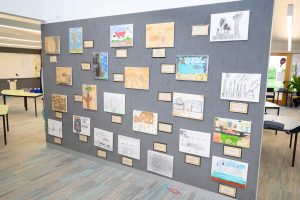
Teachers provide explicit, scaffolded instruction using evidence-based practices such as the ‘I do, we do, you do’ model. Lessons include narrative-driven explanations, guided practice, and regular checks for understanding to ensure students grasp key concepts. Students then apply their learning to hands-on inquiry, research projects, and problem-solving activities that connect their studies to contemporary, real-world situations. This approach encourages curiosity, critical thinking, and a deep understanding of human societies and environments.
Student Engagement
Through Humanities, students:
- Explore and understand their local environment
- Develop observation, research, and presentation skills
- Use the inquiry process to gather, analyse, and interpret information
- Learn about Australia’s role in the world and their place within it
- Form evidence-based conclusions and communicate findings to a variety of audiences
Staff Expertise and Support
Our teachers engage in ongoing professional learning to remain current with curriculum developments and best practice in Humanities education. Collaboration across year levels ensures consistency and quality of learning. A school leader in Humanities supports teachers in planning and implementation, and staff are encouraged to participate in professional networks and clusters both locally and nationally.
Community and Global Connections
The Humanities program at St Joseph’s is enriched through partnerships with local, national, and international organisations and schools, including a learning partnership with a school in Lombok, Indonesia. These experiences allow students to connect their learning to the real world and develop a global perspective.
Resources and Learning Environment
Students have access to a wide range of resources and experiences, from historical artefacts and maps to digital media and local site visits. Lessons are hands-on and inquiry-based, enabling students to investigate and present findings using multiple technologies and formats. Our program encourages students to reflect on human experiences, understand societal change, and develop informed, ethical perspectives on the world.
Developing Disciplinary Thinking
Each Humanities sub-strand develops specific ways of thinking:
- History: Interpreting sources, understanding continuity and change, cause and effect, significance, perspectives, and empathy
- Geography: Exploring place, space, environment, interconnections, sustainability, and global perspectives
- Civics & Citizenship: Understanding government, laws, rights, responsibilities, and active citizenship in a diverse society
- Economics & Business: Learning resource allocation, decision-making, financial literacy, and the impact of economic systems locally and globally
Through this structured approach, students develop not only knowledge but also critical thinking, inquiry skills, and the ability to apply their learning to meaningful questions about themselves, their communities, and the wider world. Humanities at St Joseph’s equips students to become active, informed, and reflective citizens prepared to engage with complex social, environmental, and economic challenges.